
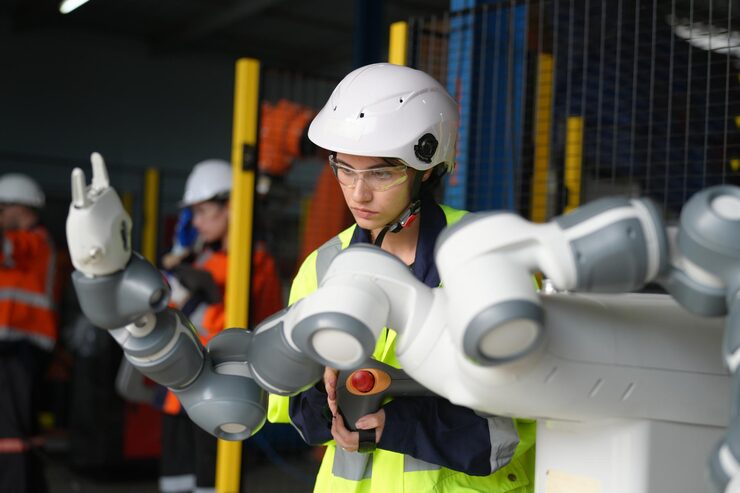


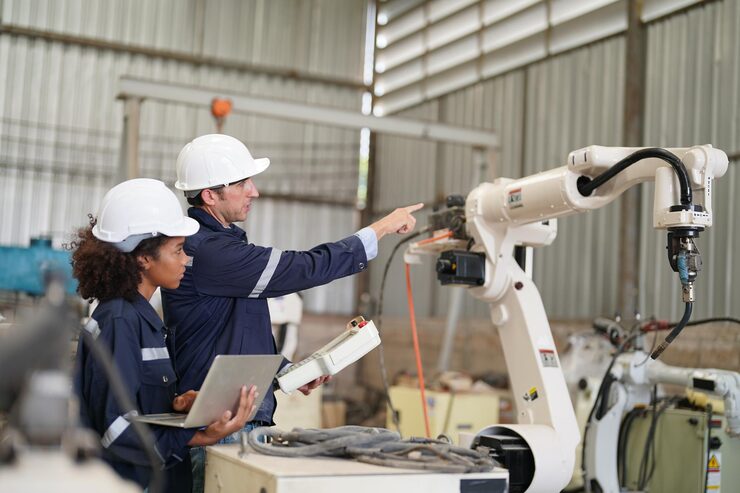
For decades, industrial automation was synonymous with massive, caged robotic arms that required specialized programming, heavy safety infrastructure, and vast amounts of factory floor space. These legacy systems were highly effective for mass production, but they lacked the agility required for modern, dynamic manufacturing environments. Today, the industrial landscape is rapidly shifting toward a more flexible solution: collaborative robots, or cobots. Designed to work safely and seamlessly alongside human operators, AUBO collaborative robots are breaking down the traditional barriers of automation and ushering in the era of Industry 4.0.
The most significant advantage of collaborative robots is their unparalleled flexibility and ease of deployment. Unlike traditional industrial robots that require weeks of complex coding by specialized engineers, AUBO cobots feature intuitive hand-guide teaching and user-friendly graphical interfaces. This allows your existing workforce to set up, program, and modify tasks in a matter of hours. Whether the task involves assembly, material handling, or machine tending, the cobot can be easily repurposed to meet shifting daily production demands.
Furthermore, workplace safety is fundamentally transformed by cobot technology. Built-in collision detection and advanced force-limiting technologies ensure that the robot will instantly stop upon encountering unexpected resistance. This eliminates the need for costly, restrictive, and space-consuming safety fences in the vast majority of applications. Operators can work shoulder-to-shoulder with the robot, combining human ingenuity and problem-solving with robotic precision and endurance.
As industries worldwide face critical labor shortages and fluctuating market demands, integrating collaborative robots is no longer just an optional upgrade—it is a strategic necessity. With lower setup costs, reduced footprint, and rapid deployment times, small and medium-sized enterprises (SMEs) can now achieve a rapid return on investment, allowing them to scale efficiently and stay highly competitive in the global market.