
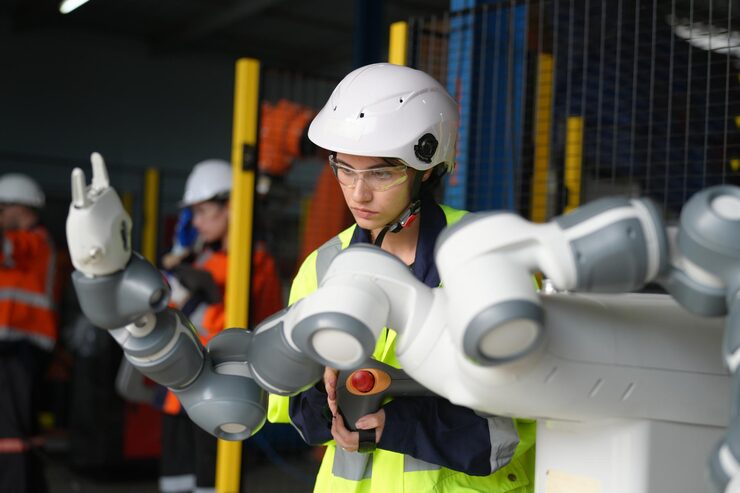


One of the most common questions facility managers ask when exploring the transition to automation is whether they need to install heavy safety fences and interlock systems. In the era of traditional industrial robots, heavy cages were an absolute necessity to prevent catastrophic workplace injuries. However, with the advent of collaborative robots, the answer is a resounding no. But how exactly does a cobot ensure absolute safety when humans and robots share the exact same workspace?
The secret lies in advanced, real-time sensory feedback. AUBO cobots continuously monitor torque and resistance through highly sensitive, built-in joint sensors. If the robotic arm makes unexpected contact with an operator or an object, the system detects the spike in force and instantly halts all movement within milliseconds. This force-limiting technology ensures that any impact is kept well below the threshold of injury.
Furthermore, AUBO cobots strictly adhere to the highest global safety guidelines, including ISO 10218-1 and ISO/TS 15066 specifically designed for collaborative industrial robot systems. Facility managers can program custom safety zones, limiting the robot’s speed and force depending on how close a human worker is to the operation area.
Eliminating physical safety cages provides massive benefits to a facility. It saves valuable factory floor space, reduces the hidden costs of automation infrastructure, and fosters a more integrated, cooperative working environment. Safety without fences represents the true spirit of modern manufacturing—empowering humans and machines to achieve greater efficiency together, without compromising on workplace wellbeing.