
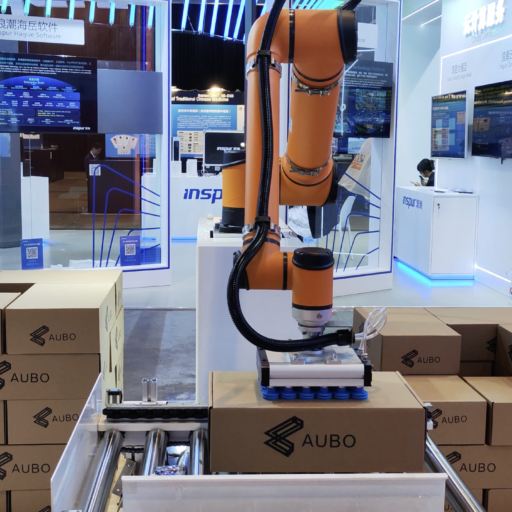
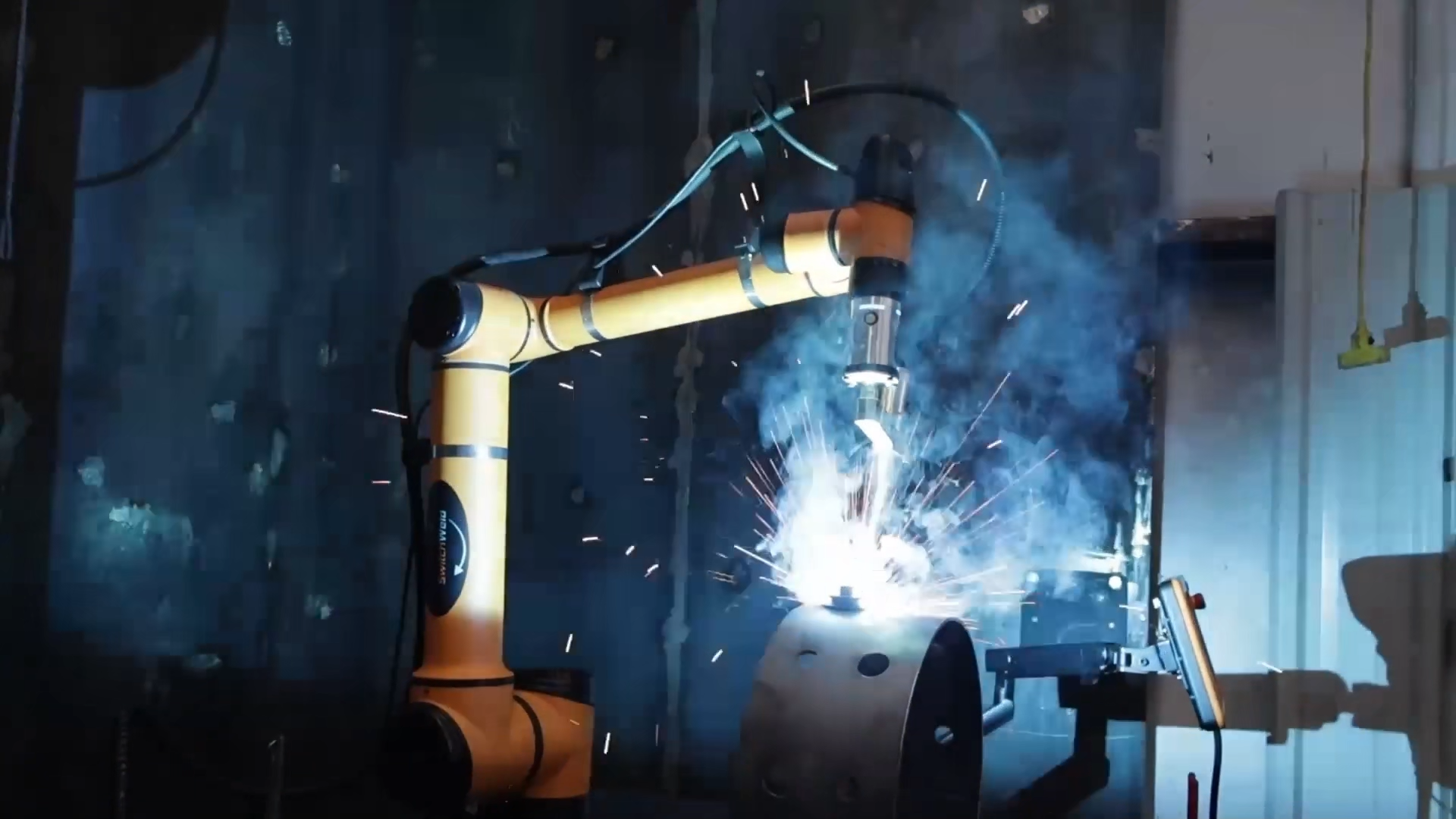
Some jobs are too heavy for a standard cobot. For those, plants have often turned to a caged industrial robot.
The AUBO G Series is AUBO’s newest line of heavy-duty cobots. The G35 handles up to 35 kg, and the G40 handles up to 40 kg. Both add torque sensing in every joint and EtherCAT-based motion control.
Coming to North America in 2027. AUBO Robotics USA will begin offering the G Series in 2027, with support from our Romulus, Michigan headquarters.
This guide covers what the G Series can do, how the two models compare, and where they fit on your floor.
When Does a High Payload Cobot Make Sense?
Cobots have traditionally handled lighter work. As plants automate heavier jobs, a heavy-duty cobot lets you keep cobot-style setup without moving to a fully guarded industrial cell.
The G Series is a strong fit when you need to:
- Move heavy parts or cases, up to 35 or 40 kg including the tool.
- Run heavy end-of-arm tools, such as heavy-duty welding torches or large grippers.
- Work in tough conditions, like welding cells or cold storage.
- Fit into tight spaces, with a base just 315 mm (12.4 in) across.
AUBO G35 vs. G40: Specs at a Glance
The two G35 and G40 cobots share the same platform. The G35 gives you more reach, while the G40 gives you more payload in a more compact envelope.
| Spec | AUBO G35 | AUBO G40 |
|---|---|---|
| Payload | 35 kg / 77.2 lb | 40 kg / 88.2 lb |
| Reach | 2,100 mm / 82.7 in | 1,800 mm / 70.9 |
| Robot weight | 115 kg / 253.5 lb | 109 kg / 240.3 lb |
| Base diameter | 315 mm / 12.4 in | 315 mm / 12.4 in |
| Repeatability | ±0.05 mm | ±0.05 mm |
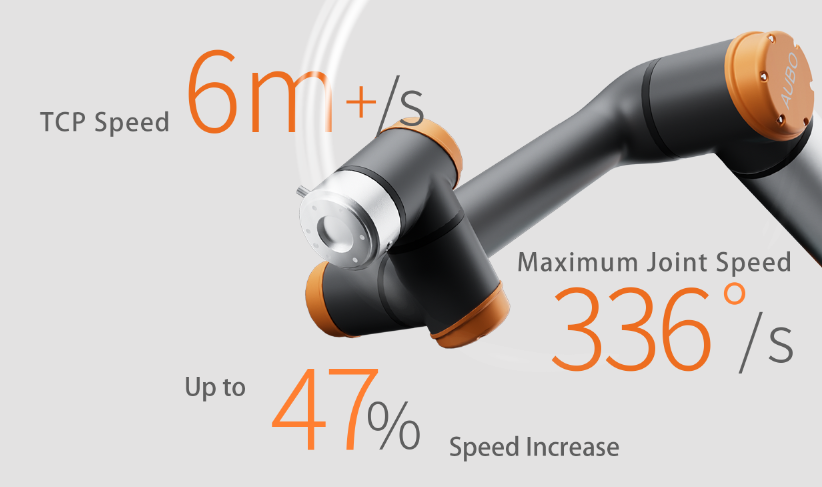
| Max joint speed | Up to 336°/s | Up to 336°/s |
| Max tool speed | Up to 6.4 m/s | Up to 6.4 m/s |
| Control system | 96 V, EtherCAT, 1 kHz control | 96 V, EtherCAT, 1 kHz control |
The G40’s payload-to-weight ratio of about 1:2.73 means a lot of lifting capacity for a light arm, which makes mounting and relocating easier.
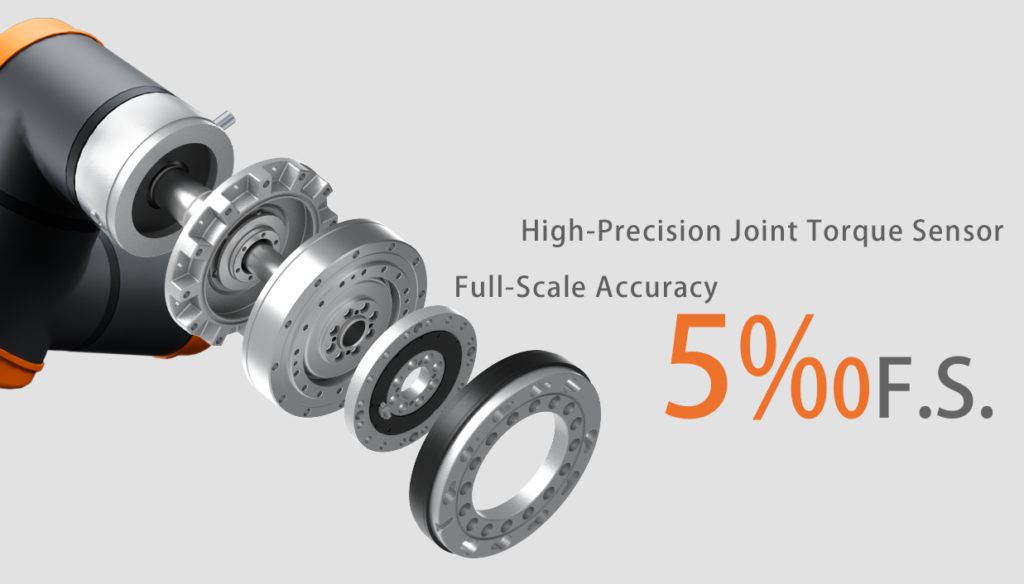
What Makes the G Series a Torque Sensing Cobot
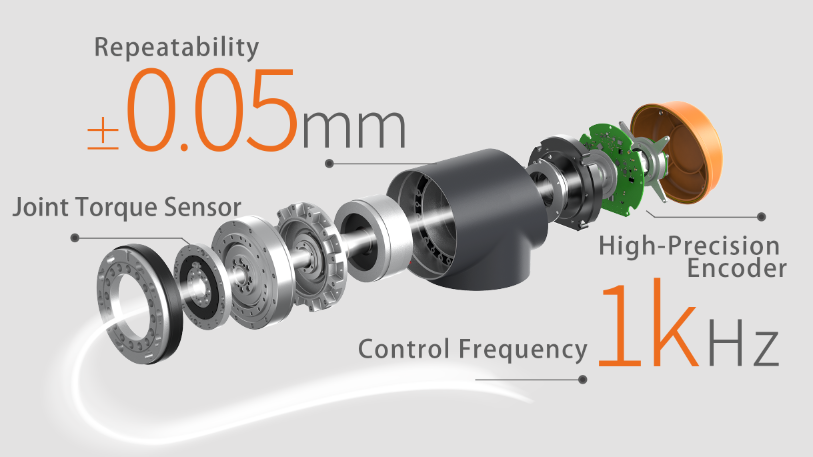
- Torque sensors in every joint let the robot detect force changes and adjust position and force in real time, protecting parts and keeping processes steady.
- EtherCAT motion control at 1 kHz, with vibration suppression, helps the arm hold ±0.05 mm repeatability at speed.
- A 96 V power platform, up from AUBO’s earlier 48 V, transmits power more efficiently and reduces heat under heavy use.
- Flexible setup, with a standard or compact Mini controller, cables up to 40 m, a wired G-Pendant with e-stop, and the wireless G-STICK controller. Both run on AuboStudio software.
Where the G Series Fits
- Welding: IP67 protection and adaptive motion control for stable operation in harsh cells.
- Logistics and palletizing: high payload and fast joints improve stacking stability and cycle times.
- Automotive: heavy component handling, assembly and painting.
- Machine tending and cold storage: loading heavy blanks, and handling cases where cold makes manual work difficult.
AUBO G Series FAQs
How much can the G Series lift? The G35 handles up to 35 kg (77.2 lb), and the G40 up to 40 kg (88.2 lb), including the tool.
What is the difference between the G35 and G40? The G35 offers 35 kg payload and 2,100 mm reach. The G40 lifts up to 40 kg in a more compact reach. Both share the same base, repeatability and EtherCAT control.
How fast is the G Series? Joint speeds reach up to 336° per second, and tool speeds up to 6.4 m/s.
Does a G Series cobot need safety fencing? It depends on your application and risk assessment. Heavy payloads and fast speeds make a careful assessment especially important.
When will the G Series be available in the U.S.? AUBO Robotics USA plans to begin offering the G35 and G40 in 2027. Contact our team for updates.
Get Ready for the G Series in 2027
The AUBO G Series brings cobot-style setup to heavy welding, palletizing, assembly and machine tending, with up to 40 kg payload and torque sensing in every joint.
Planning a heavy-payload project for 2027? Contact our team to discuss your application and get G Series updates as availability approaches. Need heavy-payload automation sooner? The AUBO iS35 handles payloads up to 35 kg today.
Comparing options? Read our guide to cobots vs. industrial robots to see where a heavy-duty cobot fits.